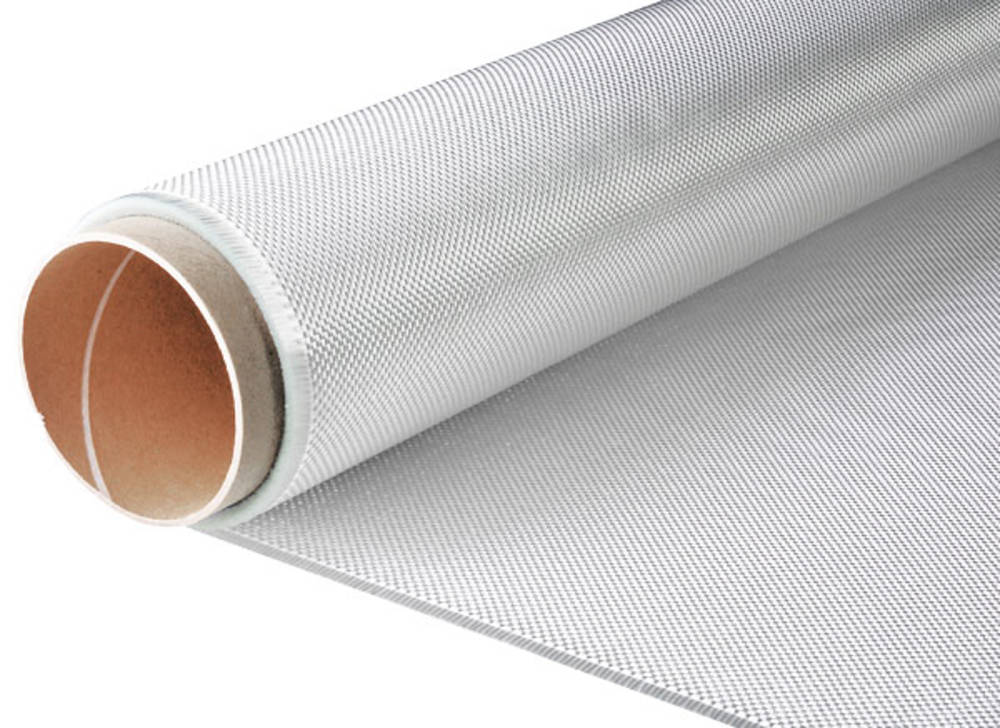
Robust 280 g/m² glass fabric in plain weave – dimensionally stable, easy to handle and suitable for general-purpose GFRP laminates.
Interglas 92115 with FK144 finish has a comparatively stable fabric structure and is particularly suitable for flat to moderately shaped components where easy handling and low-distortion cutting are important. The 100 cm width is well suited to a wide range of applications in vehicle construction, boat building and model making.
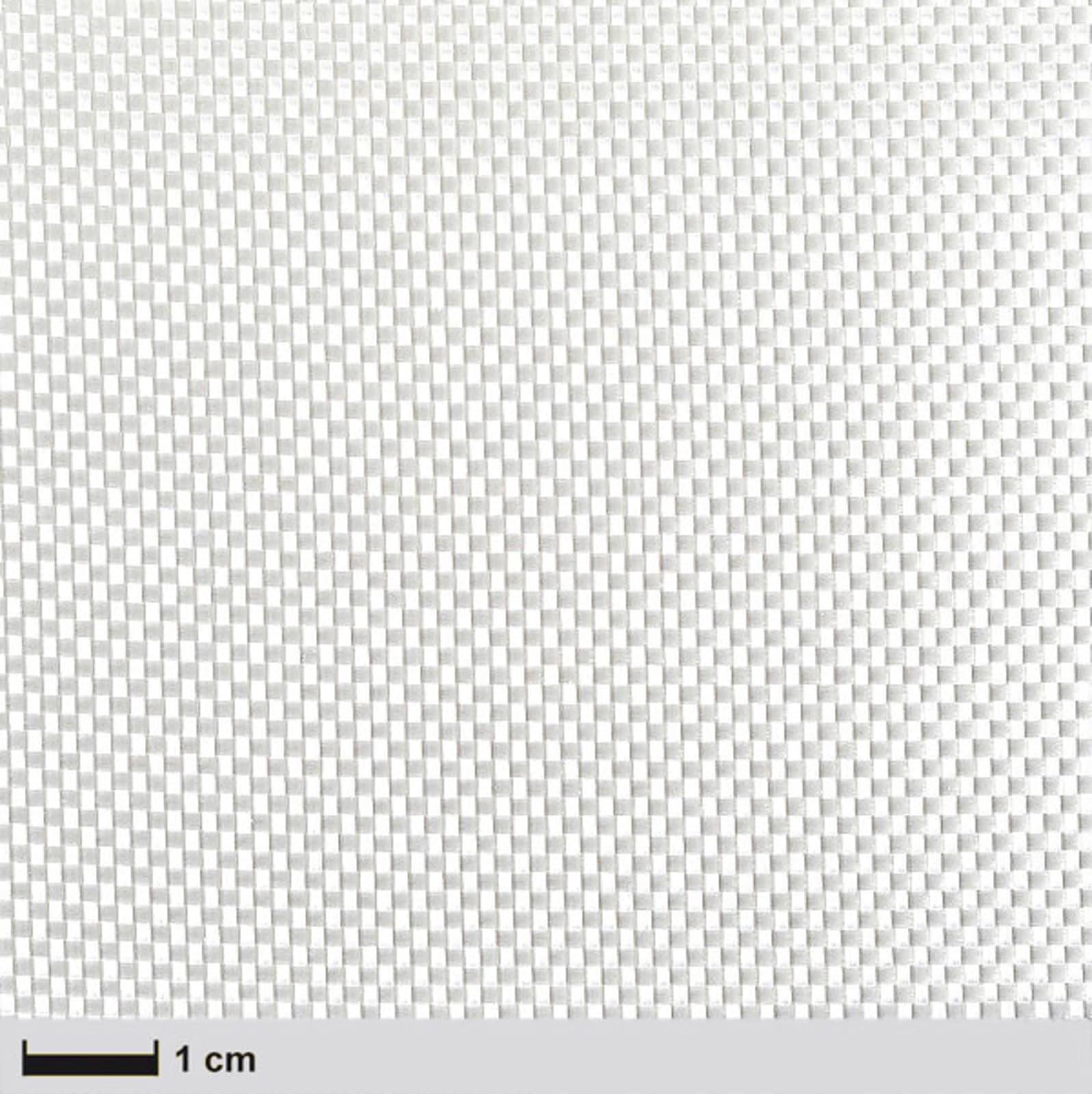
Interglas 92115 is a glass-filament fabric with an areal weight of 280 g/m² and a plain-weave construction. The high number of yarn intersections provides comparatively good resistance to yarn displacement. This facilitates cutting, positioning and laminating, particularly on flat and moderately curved component geometries.
The FK144 finish supports processing with epoxy resins and promotes wet-out of the glass filaments. The fabric is therefore suitable for conventional hand lay-up laminates and a wide range of general GFRP applications.
| Interglas / Style |
92115 |
| Areal weight |
280 g/m² |
| Finish |
FK144 |
| Weave |
Plain weave |
| Warp yarn |
EC9-68 × 3 t0 |
| Weft yarn |
EC9-204 |
| Warp density |
7.0 ends/cm |
| Weft density |
6.5 picks/cm |
| Width |
100 cm |
| Dry thickness, nominal |
0.30 mm |
Benefits of the Fabric
- stable plain-weave construction with good resistance to yarn displacement
- low-distortion cutting and positioning
- 280 g/m² areal weight for robust GFRP laminate lay-ups
- FK144 finish for good processing with epoxy resins
- 100 cm width for versatile cutting and laminating work
Applications
The fabric is particularly suitable for components where a stable fabric structure and straightforward handling are more important than very high drapability. For strongly three-dimensional shapes and tight radii, twill or satin fabrics are generally easier to conform to the mould geometry.
Typical applications:
- automotive and vehicle components
- boat building and repair laminates
- model making
- GFRP shells, panels and covers
- general reinforcement and repair work
Suitable Resin Systems
The FK144 finish is particularly suitable for processing with epoxy resins. Depending on the component requirements, suitable polyester or vinyl ester resin systems may also be used. For high-quality laminates, a sufficiently low-viscosity laminating resin is recommended to ensure uniform and complete wet-out of the fabric.
Calculated Data for Hand Lay-Up Laminates with 35 Vol.-% Fibre Content
| Resin consumption |
approx. 220 g/m² |
| Laminate thickness |
approx. 0.308 mm |
| Laminate weight |
approx. 500 g/m² |
Benefits of the 100 cm Width
The 100 cm fabric width provides a practical balance between large-area processing and straightforward handling. It allows continuous cut pieces for many medium-sized components without making the dry fabric unnecessarily difficult to cut and position.
Technical Notes
Plain weave
The regular interlacing of warp and weft yarns gives the fabric a stable structure and good resistance to yarn displacement. Compared with twill fabrics, its drapability is lower on pronounced curves and complex three-dimensional shapes.
Fibre distribution
With 7.0 ends/cm in the warp direction and 6.5 picks/cm in the weft direction, the fabric construction is almost symmetrical. The fabric therefore has no pronounced primary reinforcement direction.








 MSDS Interglas Glass fabric (PDF)