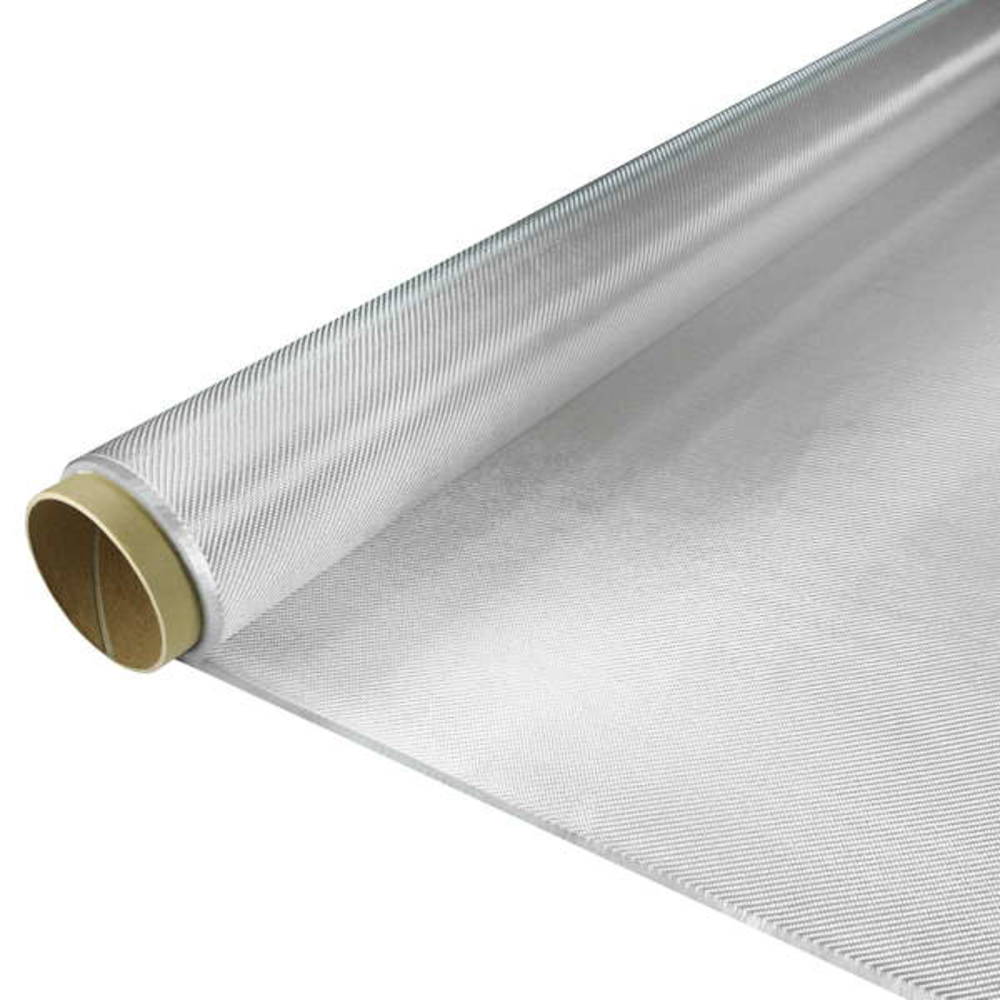
Fine 163 g/m² E-glass fabric in twill weave for lightweight GFRP laminates, curved moulded parts and demanding lightweight composite structures.
Interglas 92110 with FK 144 finish combines a fine fabric construction with good drapability. The 100 cm version is particularly convenient for fuselage sections, fairings, repairs, model aircraft and small to medium-sized moulded components.
MATERIAL IN AVIATION QUALITY
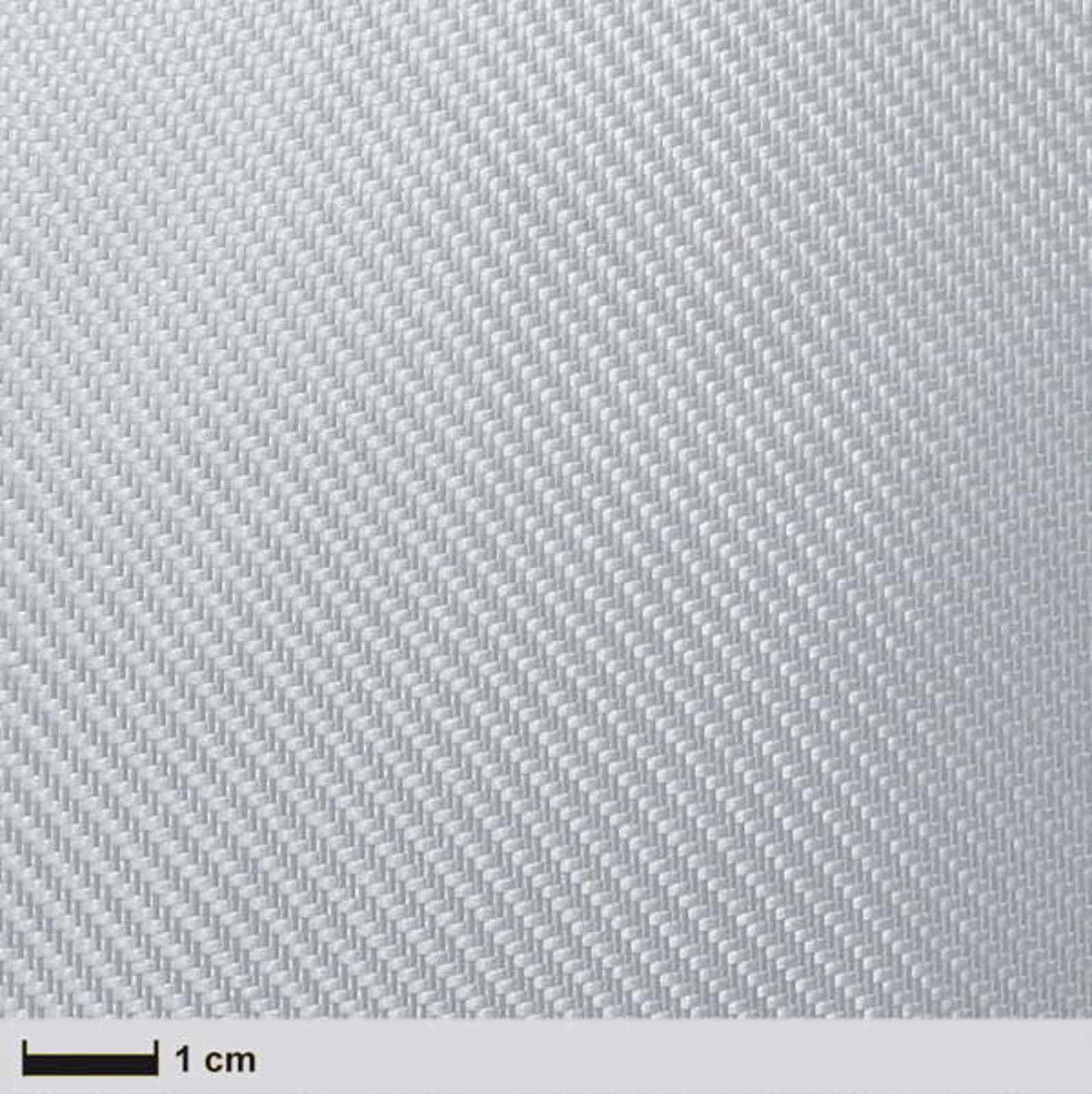
Interglas 92110 is a fine E-glass filament fabric with an areal weight of 163 g/m². Its twill weave provides good conformability to curves, radii and three-dimensional contours. This makes the fabric particularly suitable for thin-walled shells, fairings and other components where the dry reinforcement needs to follow the mould geometry with minimal wrinkling.
| Product |
Interglas 92110 |
| Fibre type |
E-glass |
| Areal weight |
163 g/m² |
| Finish |
FK 144 |
| Weave |
Twill |
| Yarn, warp / weft |
EC 9-68 / EC 9-68 |
| Thread count, warp / weft |
12.0 ends/cm / 11.5 picks/cm |
| Width |
100 cm |
Benefits of the Fabric
The twill construction gives Interglas 92110 good drapability. Compared with a comparable plain-weave fabric, the yarns can move more readily within the fabric structure, allowing the reinforcement to conform more easily to curved surfaces, radii and complex contours.
Both the warp and weft use EC 9-68 glass filament yarn. With 12.0 ends/cm in the warp direction and 11.5 picks/cm in the weft direction, the yarn distribution is very similar in both principal directions. This is particularly useful for laminate designs requiring a comparable reinforcing contribution in the two fabric directions.
The fine fabric construction can be uniformly wetted out with a suitable laminating resin. When fully impregnated, the glass fabric becomes largely transparent, which can assist visual inspection during the lay-up of thin facing plies, surface laminates and repair areas.
Applications
The 100 cm version is particularly suitable for small to medium-sized components where good drapability and convenient handling of individual cut plies are important. Typical fields of use include aircraft and ultralight aircraft construction, model aircraft and general lightweight GFRP structures.
Typical applications:
- Fuselage shells and fairings
- Aircraft and ultralight aircraft construction
- Model aircraft and model fuselages
- Curved GFRP moulded components
- Repairs and local reinforcement
- Surfboards and sports equipment
- Reinforcement of foam master models
- Automotive repairs and reinforcement
Suitable Resin Systems
The FK 144 finish is designed for processing with suitable thermosetting resin systems. Appropriate epoxy resin systems are commonly used for high-quality lightweight structures and particularly for aviation applications.
For thin laminates, a sufficiently low resin viscosity is advantageous to achieve uniform and complete wet-out of the fabric. For structural applications, the resin system, fibre content, laminate lay-up and manufacturing process must be selected according to the requirements of the particular component.
Calculated Data for Hand Lay-Up Laminates with 35 Vol.-% Fibre Content
| Resin consumption |
128 g/m² |
| Laminate thickness |
0.179 mm |
| Laminate weight |
291 g/m² |
Benefits of the 100 cm Width
The 100 cm width provides convenient handling when cutting and laying up small to medium-sized components. Particularly for curved moulded parts, repair areas and local reinforcement, individual plies can be handled and positioned in a controlled manner.
Components within the available fabric width can be covered with a continuous ply without an additional longitudinal joint. For smaller components, the roll width also allows flexible nesting of multiple cut pieces for efficient material utilisation.
Technical Notes
Twill Weave
The twill construction provides greater drapability than a comparable plain weave, allowing the fabric to conform more readily to curved geometries. Care should be taken during cutting and handling to minimise unwanted yarn displacement and fabric distortion.
Wet-Out
Work the laminating resin uniformly into the reinforcement until the fabric is fully wetted out. Excess resin should be avoided, as it increases laminate weight and thickness without increasing the fibre content.
Calculated Laminate Data
The stated values are calculated for a hand lay-up laminate with a fibre volume fraction of 35%. Actual resin consumption, laminate thickness and laminate weight depend on the resin system, manufacturing process and fibre volume fraction achieved in practice.
Automotive Applications
TÜV-recognised laminate lay-ups are available for automotive applications using this glass fabric. The specified processing instructions and laminate configurations must be observed for these applications.
Aviation Applications
The aviation quality of the fabric alone does not constitute approval of the finished laminate or component. The specified laminate construction, resin system, manufacturing process and applicable approval requirements must be observed for the particular application.








 MSDS Interglas Glass fabric (PDF)