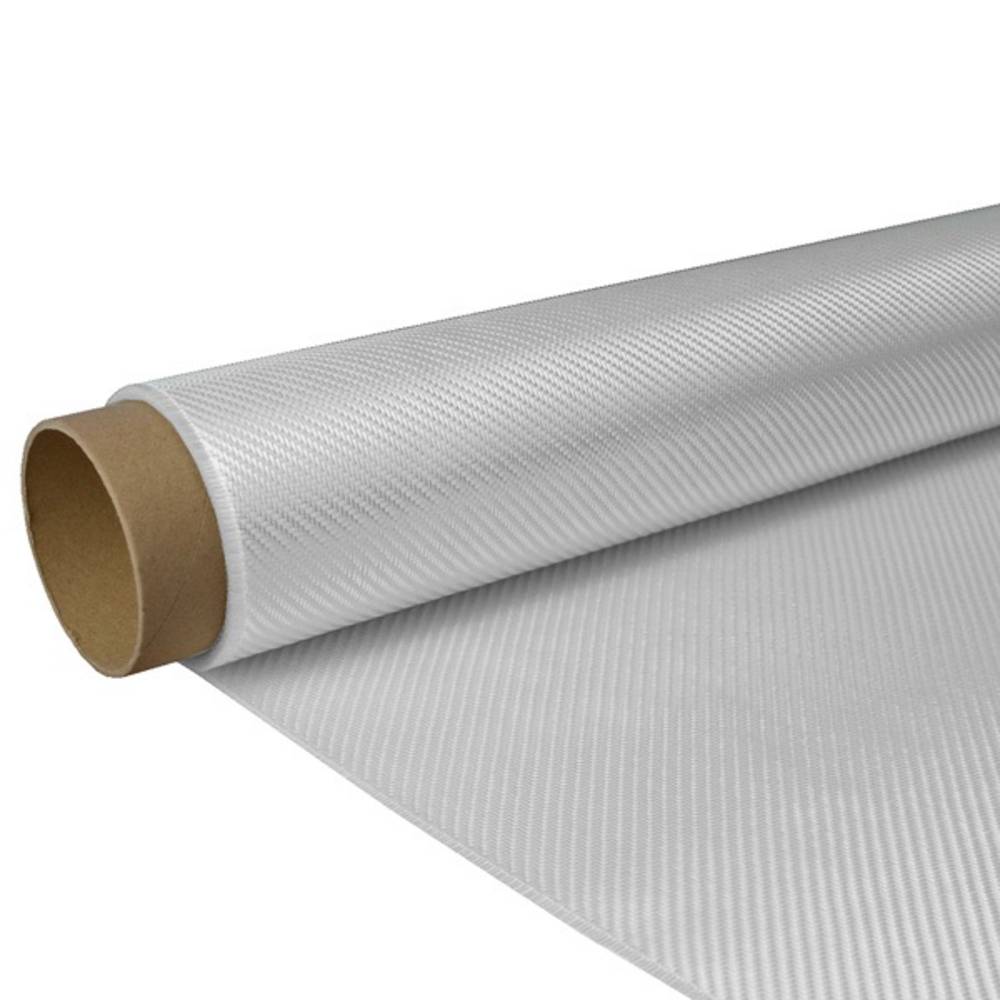
Structural E-glass fabric with an areal weight of 200 g/m² in 2/2 twill weave for load-bearing GFRP components, shell structures and demanding lightweight composite applications.
Interglas 05507 with FK 144 finish combines a higher fibre contribution per ply with good conformability and easy wet-out. Particularly suitable for fuselages and other load-bearing components in aircraft construction as well as automotive and marine components. When fully impregnated, the fabric provides high transparency.
MATERIAL ACCORDING TO AVIATION STANDARD
Interglas 05507 is an E-glass filament fabric with an areal weight of 200 g/m² and a 2/2 twill weave. It is suitable for structural GFRP laminates where a higher fibre contribution per ply is to be combined with good conformability to curved component geometries.
| Interglas |
05507 |
| Fibre type |
E-glass |
| Areal weight |
200 g/m² |
| Finish |
FK 144 |
| Weave |
2/2 twill |
| Yarn, warp / weft |
EC 9-136 / EC 9-136 |
| Thread count, warp / weft |
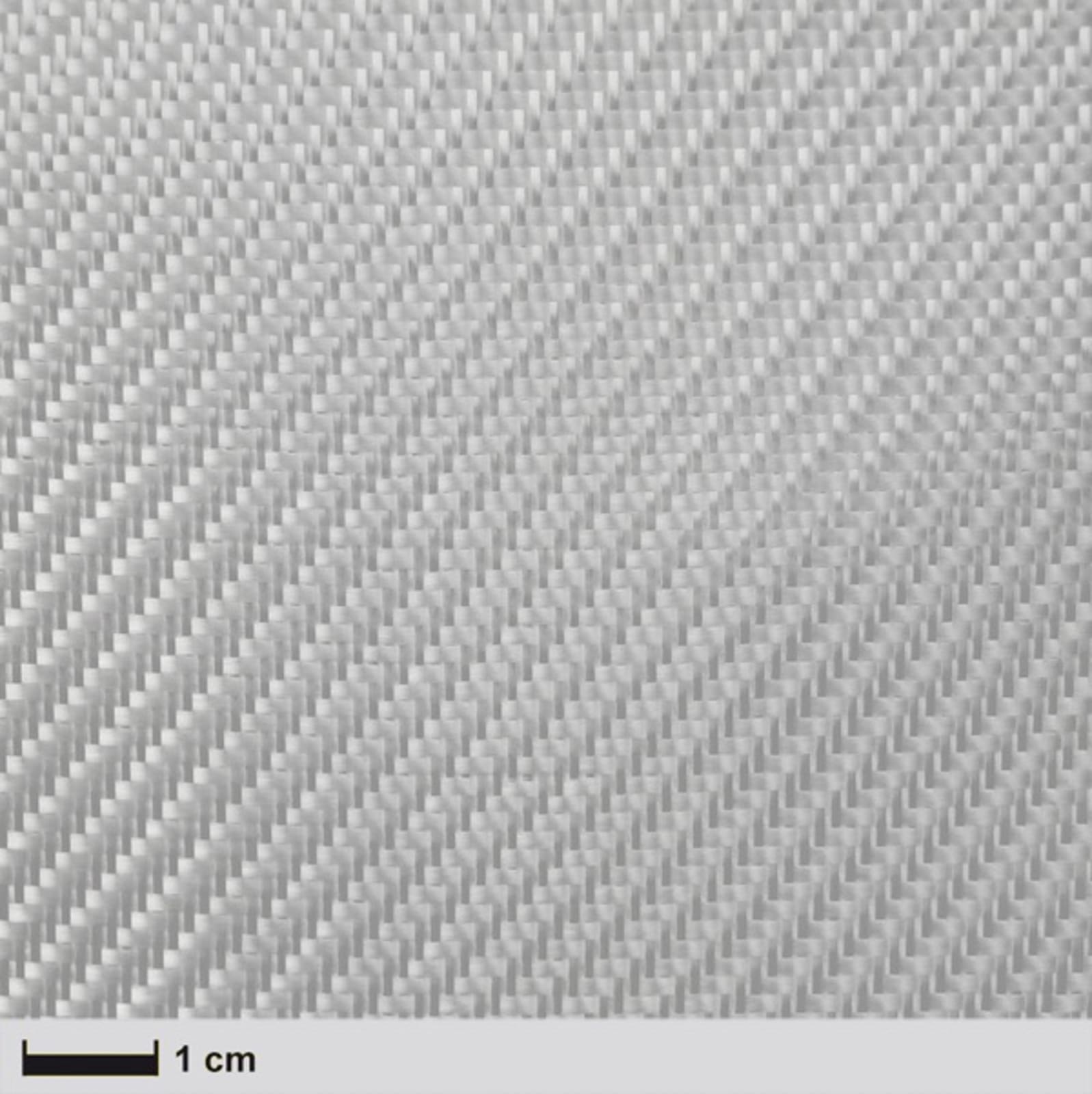
8.0 ends/cm / 6.5 picks/cm |
| Width |
100 cm |
Benefits of the Fabric
With an areal weight of 200 g/m², Interglas 05507 provides a higher fibre contribution per ply than lighter glass fabrics in the approximately 160 g/m² range. This can allow structural laminates to be built with fewer individual plies, provided that the specified laminate design and mechanical requirements permit this.
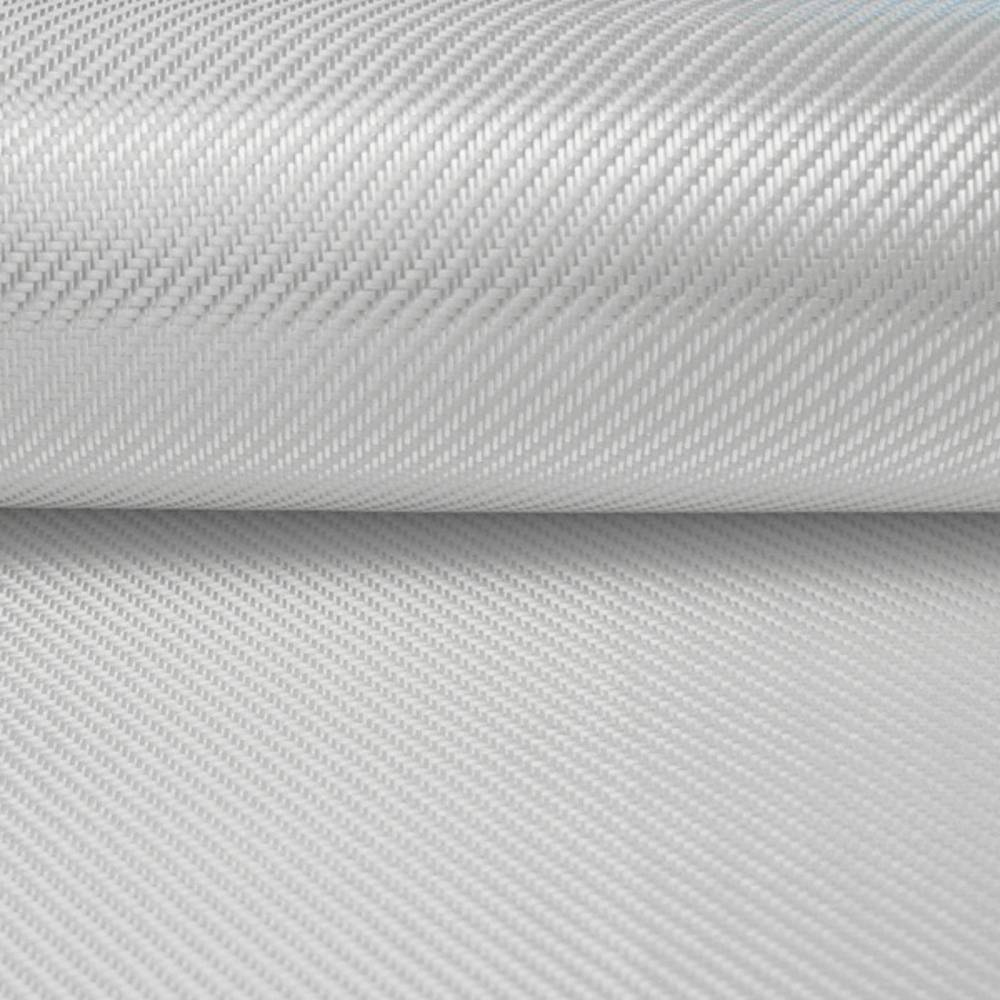
The 2/2 twill weave provides greater drapability than a comparable plain-weave construction. This allows the fabric to conform readily to curves and shell geometries – an important advantage for fuselages, fairings and other three-dimensionally shaped components.
Interglas 05507 provides good wet-out and becomes highly transparent when fully impregnated. This facilitates visual inspection of the impregnation quality and of the underlying laminate during processing.
Applications
The 200 g/m² fabric is intended for load-bearing and structural GFRP components. A key application is aircraft construction, particularly fuselages and comparable shell structures. It is also suitable for automotive and marine components as well as other technical composite structures.
Typical applications:
- Load-bearing components in aircraft construction
- Aircraft fuselages and shell structures
- Fairings and curved GFRP components
- Automotive components and structural reinforcement
- Boat and yacht components
- Technical GFRP structures
- Lightweight and model-making applications requiring a higher fibre contribution per ply
Suitable Resin Systems
The fabric can be processed with suitable epoxy, polyester and vinyl ester resin systems. Appropriately specified epoxy resin systems are commonly used for structurally loaded lightweight components and particularly for aviation applications.
For uniform and complete wet-out, the resin viscosity must be suitable for the selected laminating process. For larger or complex-shaped components, pot life and working time should also be matched to the component size and processing sequence.
Calculated Data for Hand Lay-Up Laminates with 35 Vol.-% Fibre Content
| Resin consumption |
164 g/m² |
| Laminate thickness |
0.220 mm |
| Laminate weight |
364 g/m² |
Benefits of the 100 cm Width
The 100 cm width provides convenient handling for fuselage sections, shells, fairings and a wide range of small to medium-sized structural components. Individual plies can be prepared efficiently and positioned in curved moulds in a controlled manner.
Components within the available fabric width can be covered with a continuous ply without an additional longitudinal joint. For smaller components, the roll width can also be used efficiently for multiple cut pieces.
Technical Notes
2/2 Twill Weave
The twill construction provides a good combination of drapability and fabric stability. Compared with a plain weave, the fabric conforms more readily to curved contours. Unnecessary yarn displacement should nevertheless be avoided during cutting and positioning.
Fibre Distribution
Both warp and weft use EC 9-136 yarn. However, the different thread counts of 8.0 ends/cm in the warp direction and 6.5 picks/cm in the weft direction mean that the fabric construction is not fully symmetrical. For structural laminates, the specified orientation of the fabric within the component should therefore be taken into account.
Wet-Out and Transparency
The fabric can be readily wetted out with a suitable laminating resin. Complete impregnation increases transparency and facilitates visual inspection for dry areas, trapped air and the position of the underlying laminate.
Resin Application
Apply the resin uniformly and in the quantity required for complete wet-out. Unnecessary excess resin increases laminate weight and thickness without increasing the fibre content.
Calculated Laminate Data
The stated values are calculated for a hand lay-up laminate with a fibre volume fraction of 35%. Actual resin consumption, laminate thickness and laminate weight depend on the resin system, manufacturing process and fibre volume fraction achieved in practice.
Aviation Applications
The fabric is specified as a material according to aviation standard. For the specific application, the prescribed resin systems, laminate lay-ups, manufacturing processes and applicable approval requirements must also be observed.









 MSDS Interglas Glass fabric (PDF)