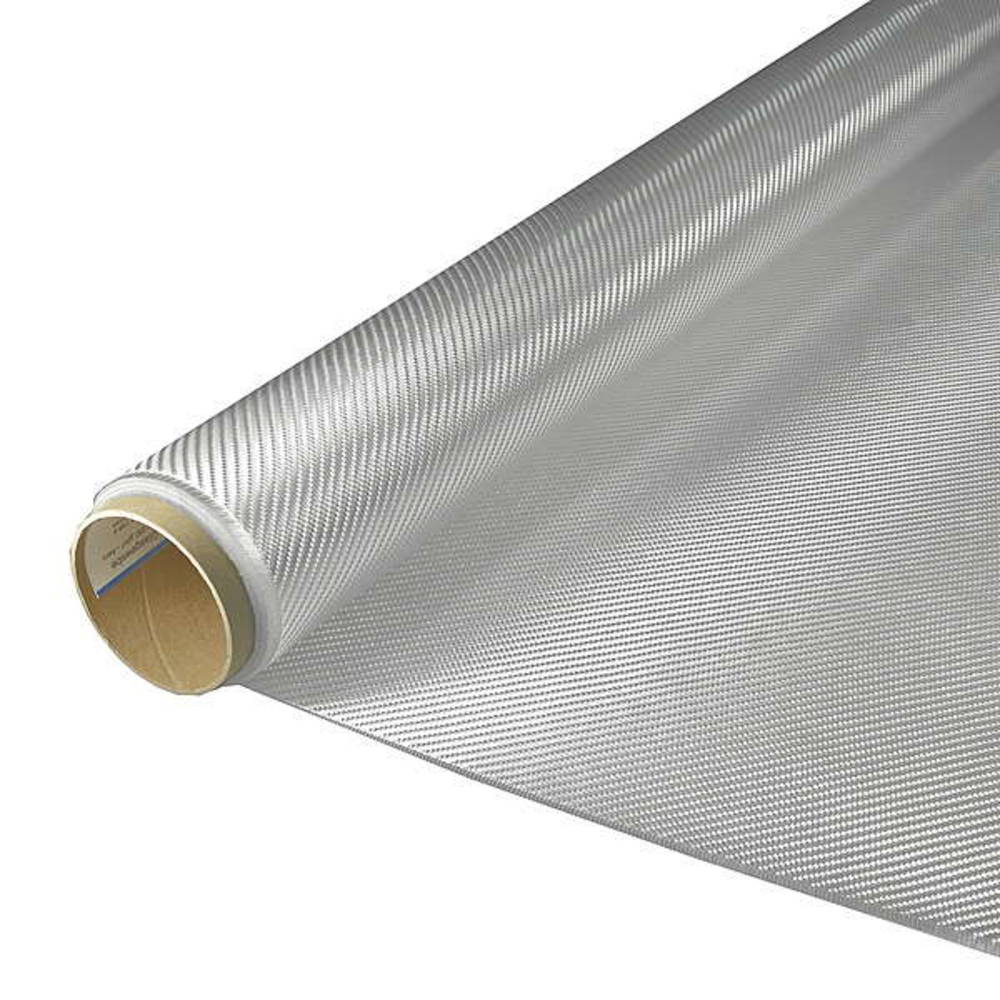
High-quality 280 g/m² E-glass fabric in twill weave for structural GFRP components, curved mouldings and demanding lightweight composite applications.
Interglas 92125 with FK 144 finish combines good drapability with reliable wet-out and high transparency after impregnation. The 100 cm width provides convenient handling for small to medium-sized components, moulded parts and repair applications.
MATERIAL ACCORDING TO AVIATION STANDARD
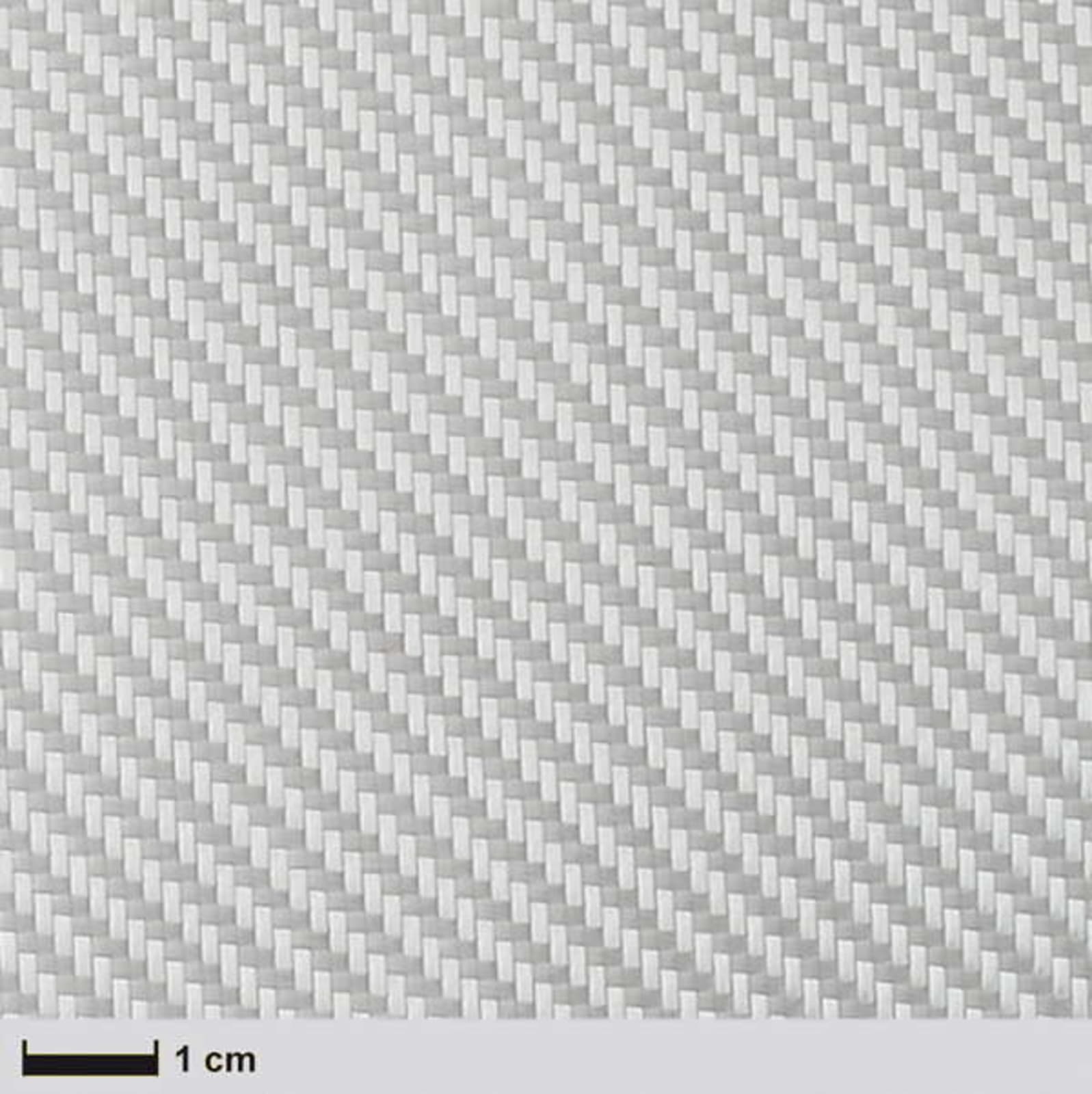
Interglas 92125 is a high-quality E-glass fabric with an areal weight of 280 g/m². The twill construction provides good drapability, allowing the reinforcement to conform readily to curved surfaces and more complex component geometries. This makes the fabric suitable for structural laminates as well as moulded components requiring controlled placement of the reinforcement.
| Interglas |
92125 |
| WLB No. |
8.4551.60 |
| Fibre type |
E-glass |
| Areal weight |
280 g/m² |
| Finish |
FK 144 |
| Weave |
Twill |
| Warp yarn |
EC 9-68 |
| Weft yarn |
EC 9-204 |
| Thread count, warp / weft |
7.0 ends/cm / 6.5 picks/cm |
| Width |
100 cm |
Benefits of the Fabric
Interglas 92125 combines a medium areal weight of 280 g/m² with the processing advantages of a twill weave. Compared with a plain-weave fabric, the lower number of yarn interlacings allows greater movement within the fabric structure, providing better drapability on curved and three-dimensional surfaces.
The fabric provides good wet-out characteristics and becomes highly transparent when fully impregnated with a suitable resin system. This facilitates visual inspection during lay-up and also makes the material suitable for laminates where a uniform and visually clean surface is required.
At 280 g/m², the fabric provides a substantially higher fibre contribution per ply than lightweight surface fabrics while remaining sufficiently conformable for many curved structural components. It therefore provides a useful balance between laminate build-up, handling and drapability.
Applications
Interglas 92125 is suitable for structural and semi-structural GFRP components in aircraft, automotive, marine, model-making and general composite applications. The 100 cm version is particularly convenient where individual plies need to be cut, handled and positioned in relatively compact moulds.
Typical applications:
- Aircraft fuselages and structural components
- Automotive body panels and bonnets
- Boat and yacht components
- Model aircraft and wings
- Moulded GFRP components
- Mould and tool construction
- High-quality surface laminates
Suitable Resin Systems
The glass fabric can be processed with suitable epoxy, polyester and vinyl ester resin systems. Epoxy resin systems are commonly used for highly loaded structural components and demanding aircraft, automotive and model-making applications.
For uniform impregnation, the resin viscosity should be suitable for the selected laminating process. Low-viscosity laminating resins facilitate complete wet-out, particularly where several reinforcement plies are applied in succession.
Calculated Data for Hand Lay-Up Laminates with 35 Vol.-% Fibre Content
| Resin consumption |
230 g/m² |
| Laminate thickness |
0.31 mm |
| Laminate weight |
510 g/m² |
Laminate configurations for automotive applications using this product are TÜV-recognised. The specified processing instructions and laminate configurations must be observed.
Benefits of the 100 cm Width
The 100 cm width is particularly convenient for small to medium-sized components, moulds and repair work. Individual plies can be laid out, cut and transferred to the component without the handling difficulties associated with very wide reinforcement fabrics.
For model-making, mould construction and technical components of limited dimensions, the 100 cm version can also provide efficient material utilisation by allowing multiple cut pieces to be arranged across the fabric width.
Technical Notes
Twill Weave
The twill construction provides greater drapability than a comparable plain weave and allows the fabric to conform more readily to curves and complex component geometries. Care should nevertheless be taken during cutting and positioning to avoid unnecessary yarn distortion.
Wet-Out and Transparency
The fabric provides good wet-out characteristics and becomes highly transparent when completely impregnated. Uniform resin distribution facilitates visual inspection and helps avoid dry areas within the laminate.
Fabric Construction
The warp and weft use different yarn specifications. The specified fibre orientation within a structural laminate should therefore be observed rather than assuming completely identical reinforcement characteristics in both fabric directions.
Resin Application
Apply the resin uniformly and in the quantity required for complete wet-out. Excess resin increases laminate weight and thickness without increasing the fibre-related reinforcing contribution.
Aviation Applications
The fabric is specified as a material according to aviation standard. For the specific application, the specified resin system, laminate lay-up, manufacturing process and applicable approval requirements must also be observed.








 MSDS Interglas Glass fabric (PDF)