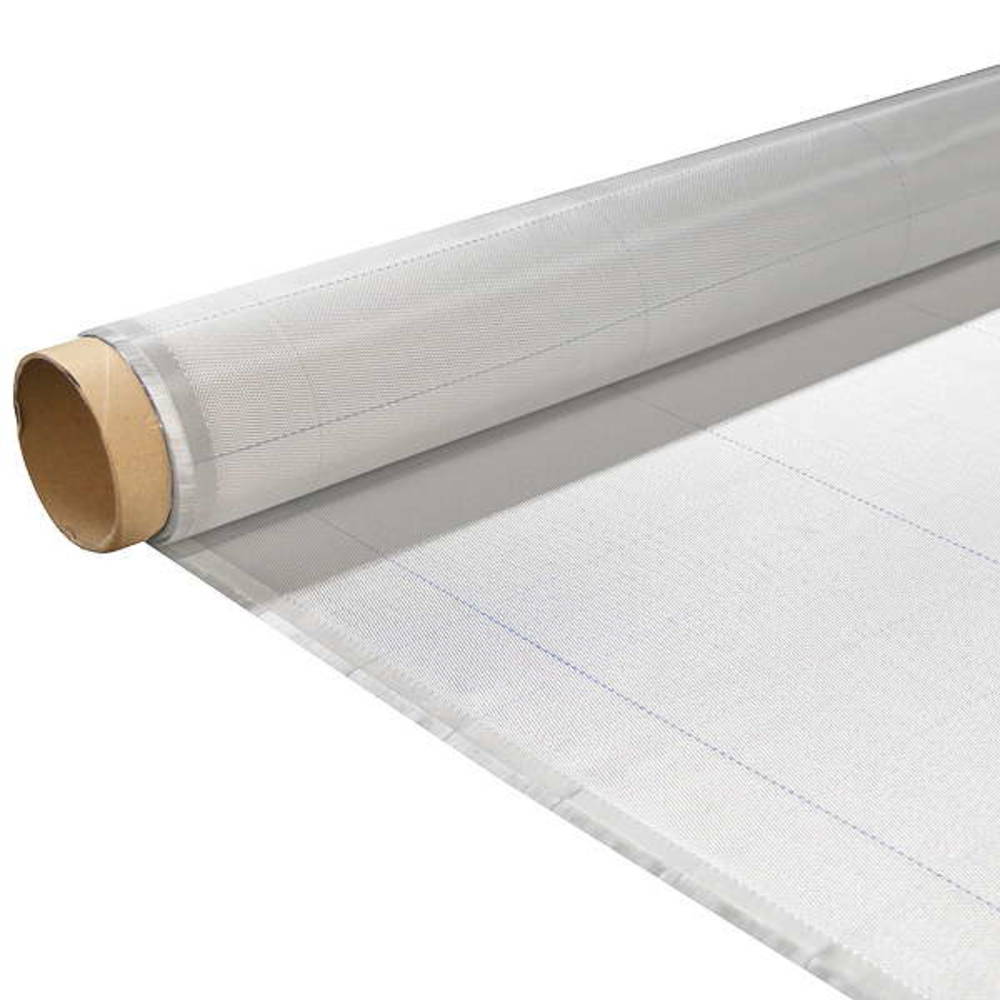
Highly drapeable 296 g/m² aerospace glass fabric in 8-harness satin weave – for complex geometries and high-quality structural components.
International Style 7781 (formerly Interglas 92626) with FK144 finish combines very high drapability with easy resin wet-out. The 8-harness satin construction with relatively few yarn intersections allows the fabric to conform particularly well to curves and three-dimensional component geometries.
MATERIAL ACCORDING TO AVIATION STANDARD
International Style 7781 glass fabric (formerly Interglas 92626) is a high-quality E-glass fabric with an areal weight of 296 g/m². Its 8-harness satin weave – designated Atlas 1/7 in German terminology – has significantly fewer yarn intersections than a plain weave. This gives the fabric very good drapability and allows it to conform closely to curved and complex component geometries.
The FK144 finish provides a soft handle, very high drapability and good wet-out with laminating resins. In combination with the satin weave, the fabric is particularly suitable for high-quality laminates where close conformity to the mould and uniform fibre placement are required.
| International Style | 7781 |
| Former Interglas designation | 92626 |
| WLB No. | 8.4568.60 |
| Areal weight | 296 g/m² |
| Finish | FK144 |
| Weave | 8-harness satin (Atlas 1/7) |
| Warp yarn | EC 6-68 × 5 |
| Weft yarn | EC 6-68 |
| Warp density | 22.0 ends/cm |
| Weft density | 21.5 picks/cm |
| Width | 100 cm |
| Construction | untwisted quality with blue tracer threads |
Benefits of the Fabric
- very high drapability due to the 8-harness satin construction
- excellent conformity to curves and complex component geometries
- easy and uniform resin wet-out
- fewer yarn intersections and lower yarn crimp than plain-weave fabrics
- FK144 finish for a soft handle and good processing characteristics
- material according to aviation standard WLB 8.4568.60
Applications
The fabric is particularly suitable for high-quality structural components and parts with complex contours. Its high drapability allows it to conform closely to concave and convex surfaces, radii and three-dimensional shapes. With careful processing, this helps to minimise wrinkling and unwanted yarn displacement.
Typical applications:
- structural parts in aircraft construction
- aircraft components and fairings
- automotive and vehicle components
- boat building and marine applications
- GFRP shells and three-dimensionally shaped components
- high-quality model and mould construction
Suitable Resin Systems
The FK144 finish is suitable for commonly used thermosetting laminating resins. Epoxy resin systems are predominantly used for high-quality structural and particularly aerospace applications. For general GFRP applications, suitable polyester and vinyl ester resins may also be used depending on the component requirements.
For aviation applications, only the resin systems specified or approved for the respective laminate construction and the prescribed processing and curing conditions must be used.
Calculated Data for Hand Lay-Up Laminates with 35 Vol.-% Fibre Content
| Resin consumption | approx. 243 g/m² |
| Laminate thickness | approx. 0.33 mm |
| Laminate weight | approx. 539 g/m² |
Benefits of the 100 cm Width
The 100 cm width allows continuous cut pieces for many medium-sized components while remaining easy to handle despite the very soft and drapeable satin construction. On curved components, the moderate width facilitates controlled positioning and forming of the dry fabric.
Technical Notes
8-harness satin weave
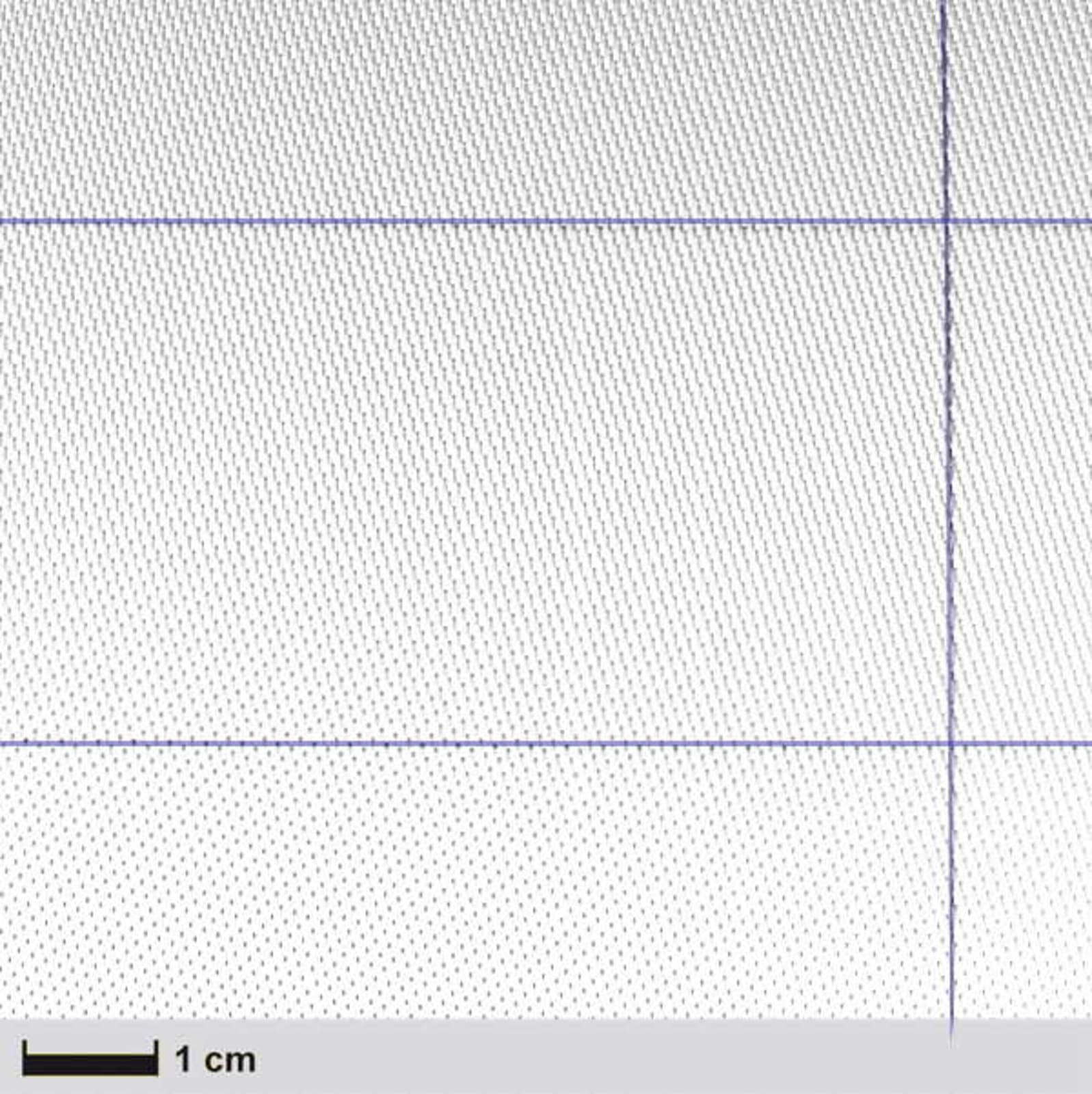
In a satin weave, the yarns run relatively straight over longer distances before forming an intersection. Compared with plain weave, this results in fewer yarn intersections and reduced yarn crimp. This particularly improves drapability and enables the fabric to conform closely to complex geometries.
Tracer threads
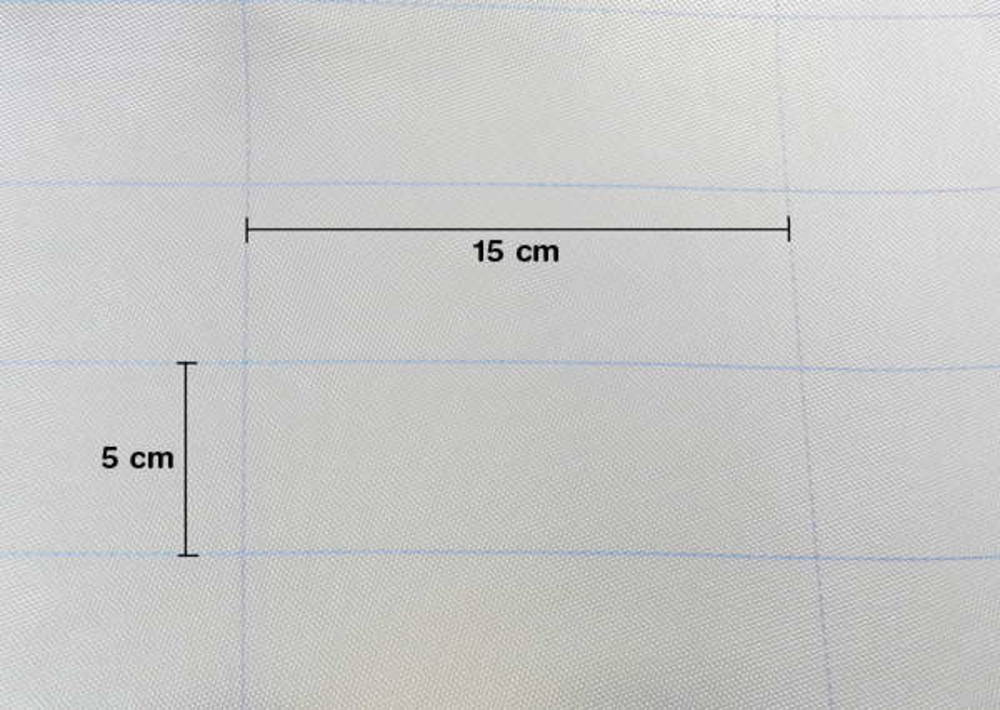
The fabric contains blue tracer threads in the warp direction at 5 cm intervals and in the weft direction at 15 cm intervals. They facilitate orientation and alignment of the fabric during cutting and laminating.
Handling
Due to their longer yarn floats, satin fabrics have lower resistance to yarn displacement than comparable plain-weave fabrics. The fabric should therefore be handled carefully during cutting, transport and positioning to minimise distortion and yarn displacement.
Aviation applications
The fabric is designated as material according to aviation standard WLB 8.4568.60. For aircraft components, the specified resin system, defined laminate lay-up, processing and curing conditions and all applicable approval and documentation requirements must additionally be observed. Qualification of the fabric alone does not constitute approval of the finished laminate or component.








 MSDS Interglas Glass fabric (PDF)