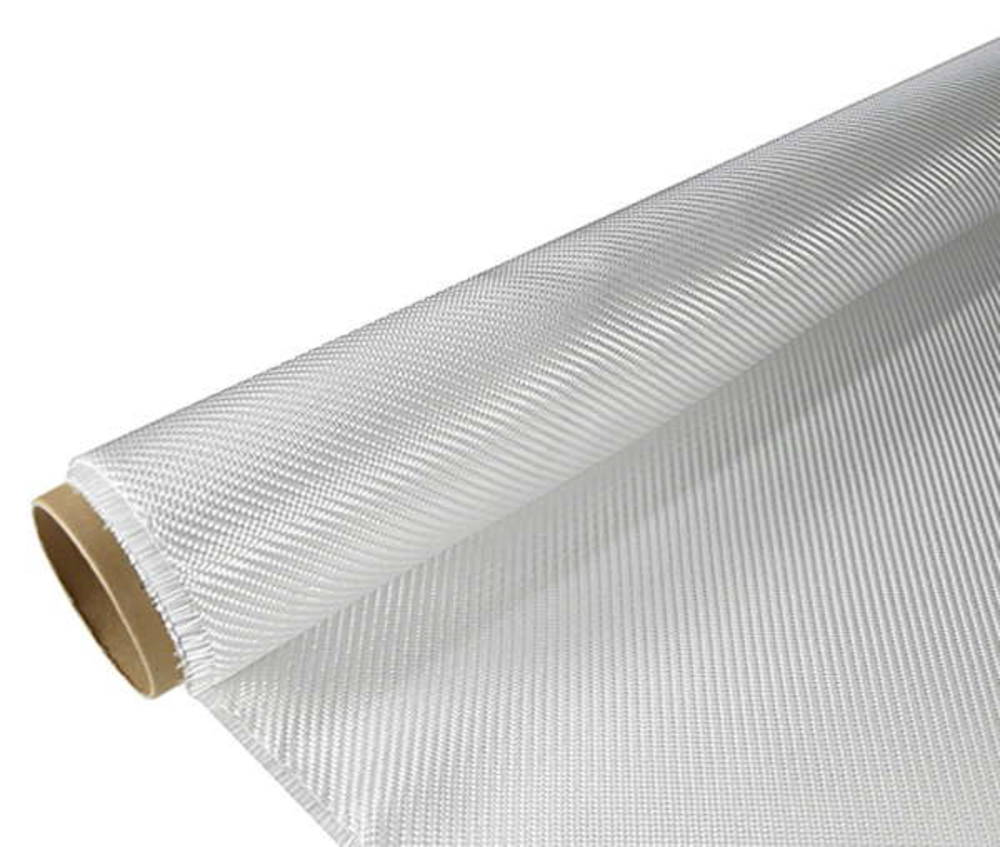
Highly conformable 390 g/m² glass fabric in twill weave – for structural laminates, increased laminate thickness and three-dimensionally shaped components.
Interglas 92140 with FK144 finish combines a comparatively high areal weight with the good drapability characteristic of twill fabrics. The fabric is easy to wet out and becomes highly transparent in the laminate. Typical applications include structural aircraft components, automotive parts and boat building.
MATERIAL ACCORDING TO AVIATION STANDARD
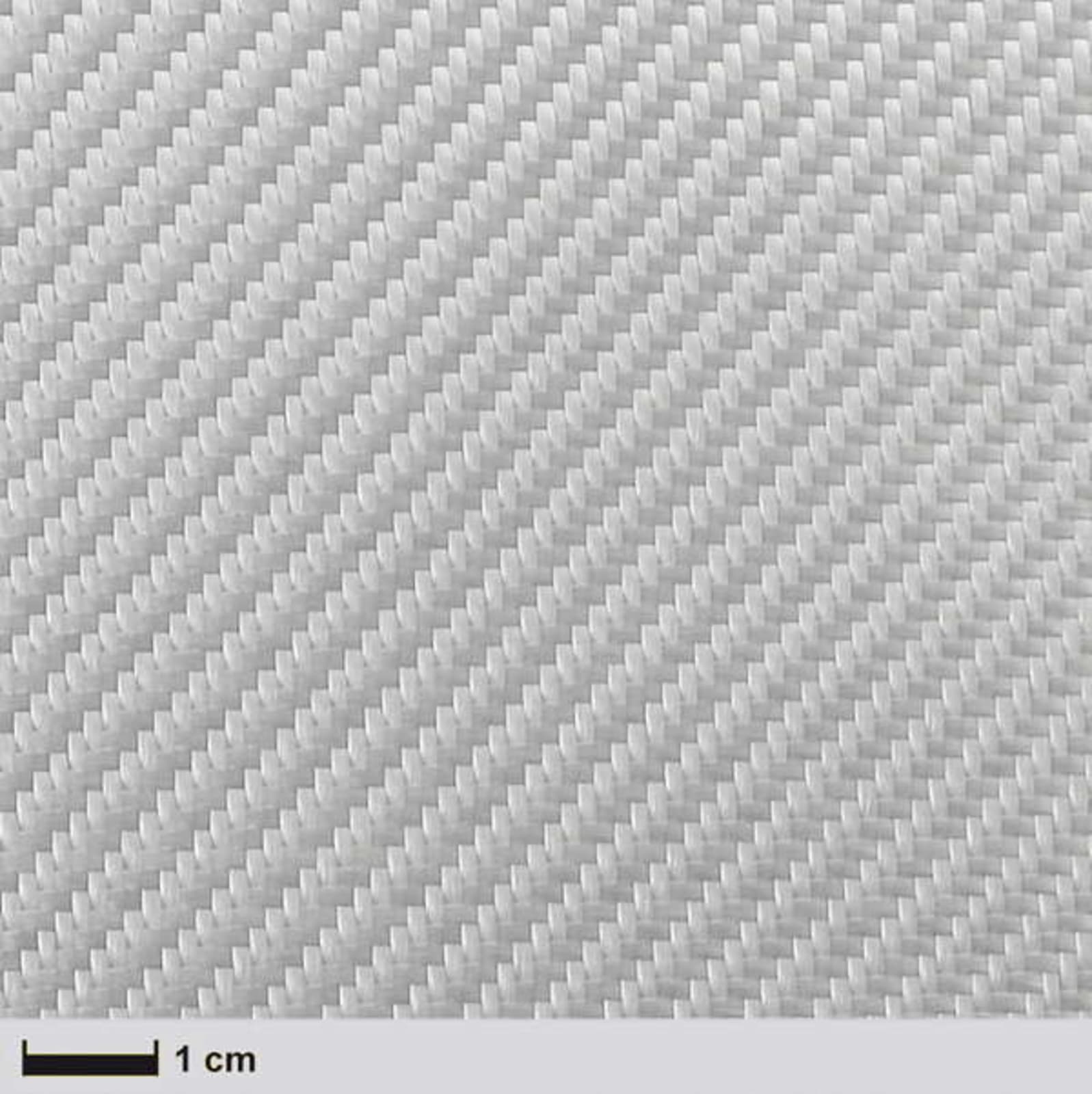
Interglas 92140 glass fabric has an areal weight of 390 g/m² and a twill-weave construction. Compared with a plain weave, twill fabrics have fewer yarn intersections and longer yarn floats. This provides improved drapability and allows the fabric to conform more readily to curves and three-dimensional component geometries.
The comparatively high areal weight allows laminate thickness to be built up efficiently. At a calculated fibre volume fraction of 35%, one ply produces a laminate thickness of approximately 0.43 mm. The fabric is therefore particularly suitable for components where greater laminate thicknesses are to be achieved with a manageable number of fabric plies.
| Interglas | 92140 |
| WLB No. | 8.4554.60 |
| Areal weight | 390 g/m² |
| Finish | FK144 |
| Weave | Twill |
| Warp yarn | EC 9-68 × 5 t0 |
| Weft yarn | EC 9-272 |
| Warp density | 6.0 ends/cm |
| Weft density | 6.7 picks/cm |
| Width | 100 cm |
Benefits of the Fabric
- good drapability for curved and three-dimensional components
- 390 g/m² areal weight for efficient laminate build-up
- easy resin wet-out
- high transparency after impregnation
- FK144 finish for good processing characteristics
- material according to aviation standard WLB 8.4554.60
Applications
The fabric is suitable for structural GFRP components as well as parts with curved and three-dimensional contours. Its twill construction facilitates forming to the component geometry and provides better drapability than a comparable plain-weave fabric.
Typical applications:
- structural parts in aircraft construction, including fuselage structures
- automotive and vehicle components
- boat building
- shell structures and fairings
- larger and more heavily built GFRP laminates
Suitable Resin Systems
For high-quality structural laminates, low-viscosity epoxy laminating resin systems are particularly suitable, allowing complete and uniform wet-out of the fabric.
For aviation applications, the resin system specified or approved for the respective laminate construction must be used. The prescribed processing, curing and documentation requirements must also be observed.
Calculated Data for Hand Lay-Up Laminates with 35 Vol.-% Fibre Content
| Resin consumption | approx. 320 g/m² |
| Laminate thickness | approx. 0.43 mm |
| Laminate weight | approx. 710 g/m² |
Benefits of the 100 cm Width
The 100 cm width provides a practical combination of area coverage and handling for a fabric of this areal weight. It allows continuous cut pieces for many medium-sized and larger components while remaining manageable during positioning and forming on curved surfaces.
Technical Notes
Twill weave
Twill fabrics have fewer yarn intersections and longer floats than plain-weave fabrics. This improves drapability and allows the fabric to conform more readily to curves and three-dimensional shapes. At the same time, resistance to yarn displacement is lower than with a comparable plain weave. Careful handling is therefore recommended during cutting and positioning.
Fibre distribution
With 6.0 ends/cm in the warp direction and 6.7 picks/cm in the weft direction, combined with different yarn constructions in warp and weft, the fabric should not be described as a fully symmetrical or balanced fabric construction.
TÜV-recognised automotive laminate lay-ups
Laminate lay-ups for vehicle construction using this glass fabric are recognised by TÜV. The specified processing instructions and laminate constructions must be followed for these applications.
Aviation applications
The fabric is designated as material according to aviation standard WLB 8.4554.60. For the finished aircraft component, the specified resin system, prescribed laminate lay-up, process parameters and applicable approval and documentation requirements must additionally be observed. Qualification of the fabric alone does not constitute approval of the finished laminate or component.








 MSDS Interglas Glass fabric (PDF)