




Aluminium powder
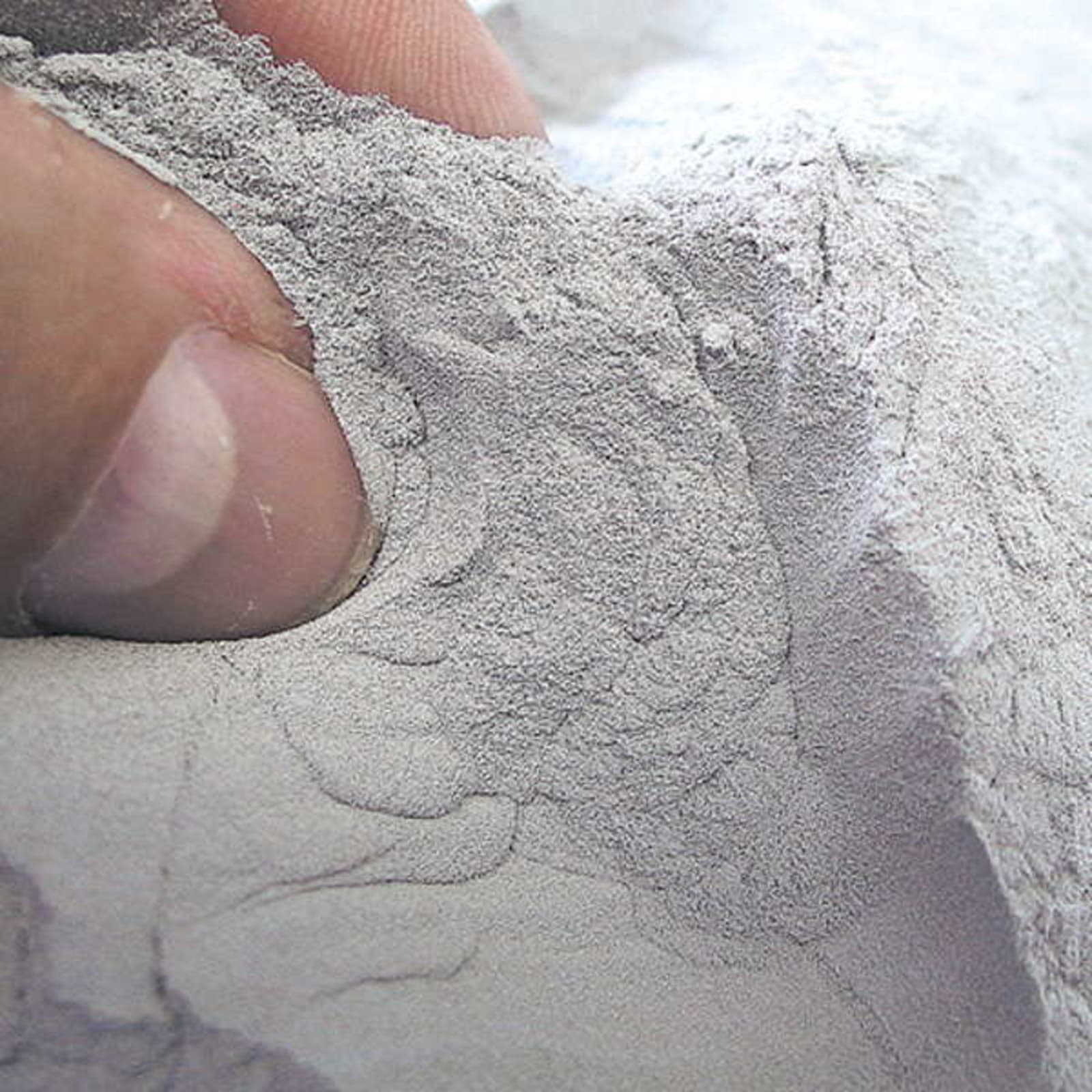
Fine aluminium powder for modifying casting and tooling compounds based on epoxy, polyester and vinyl ester resin systems. It is used when resin compounds require higher compressive strength, improved impact toughness, better thermal conductivity and increased dimensional stability.
Aluminium powder is particularly useful in composite mould making, casting compounds, backing compounds and aluminium-filled tooling systems. The filler content can be increased gradually until the required processing consistency is achieved – from pourable to pasty or kneadable.
- Increases impact toughness and compressive strength of casting and tooling compounds
- Improves the thermal conductivity of filled resin systems
- Reduces curing shrinkage
- Suitable for epoxy, polyester and vinyl ester resin systems
- Suitable for aluminium-filled tooling resin and brushable surface coats
Detailed Description
Aluminium powder is a fine metallic filler for modifying casting and tooling compounds. It is added to the ready-to-use resin/hardener mixture and improves the mechanical and thermal properties of the resin compound depending on the filler content.
From a composite processing point of view, aluminium powder is particularly useful when a resin compound needs to be adjusted for higher hardness, improved compressive strength and better dimensional stability. At the same time, the thermal conductivity of the filled compound is increased. This is advantageous in mould making where heat should be distributed more evenly throughout the mould.
Another practical advantage is the reduction of curing shrinkage. Highly filled casting and tooling compounds are more dimensionally stable and are therefore well suited for technical castings, backing structures, mould build-ups and mechanically loaded mould areas.
The consistency can be adjusted through the amount of aluminium powder added. At lower filler levels, the mixture remains more pourable. As the filler content increases, the compound becomes pasty to kneadable. Non-sagging mixtures can be achieved through a high filler content or by adding a suitable thixotropic agent.
Typical Applications
- Casting and tooling compounds with increased compressive strength
- Composite mould making and model making
- Backing compounds for moulds and surface coats
- Aluminium-filled epoxy surface coats
- Resin compounds with improved thermal conductivity
- Technical castings and repair compounds
- Pasty or kneadable resin compounds
Processing
Aluminium powder is stirred into the fully mixed resin/hardener blend. It should be added gradually so that the required consistency can be controlled during mixing.
During mixing, make sure that the powder is evenly wetted by the resin system. Add the powder slowly and mix thoroughly until a homogeneous compound is obtained. The higher the filler content, the more viscous the mixture becomes and the more carefully it must be mixed.
| Addition | Into the ready-to-use resin/hardener mixture |
| Consistency | Depending on filler content: from pourable to pasty or kneadable |
| Filler content | Increase gradually until the required consistency is achieved |
| Non-sagging mixture | By high filler content or additional use of a thixotropic agent |
| Suitable resin systems | Epoxy, polyester and vinyl ester resin systems |
Aluminium-Filled Tooling Resin / Filled Surface Coat
For an aluminium-filled tooling resin, clear EP gelcoat can be used as the base system together with hardener S, L or EPH 161. The aluminium powder is stirred into the fully mixed EP gelcoat/hardener blend.
| Base system | Clear EP gelcoat + hardener S, L or EPH 161 |
| Addition | Stir aluminium powder into the fully mixed EP gelcoat/hardener blend |
| Mixing ratio | 100 parts by weight resin/hardener mixture : 100 parts by weight aluminium powder |
| Result | Thixotropic, easily brushable epoxy surface coat with high surface hardness and good scratch resistance |
This formulation produces an easily brushable aluminium-filled epoxy surface coat. It is particularly suitable for mould surfaces where high surface hardness, good scratch resistance and improved heat transfer are required.
Technical Data
| Particle size > 63 µm | max. 5 % of particles |
| Particle size > 32 µm | 45–70 % of particles |
| Aluminium content | 99.7 % |
| Density | 2.7 g/cm³ |
| Melting point | 660 °C |
Practical Processing Notes
For consistent results, add the aluminium powder slowly and mix it in thoroughly. At higher filler levels, it is advisable to add the powder in portions to prevent dry powder pockets and to keep the resin compound homogeneous.
Very highly filled mixtures show a significantly different flow behaviour. For larger applications, a small trial mix should therefore be made first to check consistency, pot life, application behaviour and curing.
When handling powdered fillers, avoid dust formation, do not inhale the powder and use suitable personal protective equipment. Observe the safety data sheet.
Compatible Products
Depending on the application, aluminium powder can be combined with suitable epoxy, polyester or vinyl ester resin systems. For non-sagging mixtures, a suitable thixotropic agent can be added. For aluminium-filled surface coats, clear EP gelcoat with the appropriate hardener is suitable.
FAQ
What is aluminium powder used for in resin systems?
Aluminium powder is used as a metallic filler to improve casting and tooling compounds mechanically and thermally. It increases compressive strength, improves thermal conductivity and reduces curing shrinkage.
Can aluminium powder be used with epoxy resin?
Yes. Aluminium powder is suitable for epoxy resins as well as polyester and vinyl ester resin systems. It is always stirred into the fully mixed resin/hardener blend.
How much aluminium powder should be added?
The amount depends on the required consistency and application. The filler content can be increased gradually until the mixture is adjusted from pourable to pasty or kneadable.
How is an aluminium-filled epoxy surface coat made?
Clear EP gelcoat with hardener S, L or EPH 161 can be used as the base system. Add 100 parts by weight aluminium powder to 100 parts by weight of the fully mixed EP gelcoat/hardener blend.
Does aluminium powder make the mixture non-sagging?
At high filler levels, a pasty, non-sagging compound can be obtained. If required, a suitable thixotropic agent can be added.


Aluminium powder, tin/ 250 g
Item no. 2101600 Only 7 left in stock, more on the way (delivery time 1-2 days)
Add to Shopping ListScaled Price
- From Qty 2: 5,00%
- From Qty 5: 10,00%
Aluminium powder, tin/ 500 g
Item no. 2101601-N Only 4 left in stock, more on the way (delivery time 1-2 days)
Add to Shopping ListScaled Price
- From Qty 2: 5,00%
- From Qty 5: 10,00%
Aluminium powder, tin/ 1 kg
Item no. 2101602 Only 11 left in stock, more on the way (delivery time 1-2 days)
Add to Shopping ListScaled Price
- From Qty 2: 5,00%
- From Qty 5: 10,00%
Aluminium powder, canister/ 5 kg
Item no. 2101603 Only 3 left in stock, more on the way (delivery time 1-2 days)
Add to Shopping ListScaled Price
- From Qty 2: 10,00%
- From Qty 3: 15,00%
- From Qty 5: 20,00%
all Prices price incl. VAT, possibly plus shipping
Article information
language: [language]
info3: [info3]
filetype: [filetype]
url: [url]
Instructions for use
language: [language]
info3: [info3]
filetype: [filetype]
url: [url]
MSDS
 MSDS Aluminium powder (PDF)
language: [language]
info3: [info3]
filetype: [filetype]
url: [url]
Product information
language: [language]
info3: [info3]
filetype: [filetype]
url: [url]
language: [language]
info3: [info3]
filetype: [filetype]
url: [url]
Hazards identification - Aluminium powder
Classification of the substance or mixture
The product is not classified according to the CLP regulation.Labelling according to Regulation (EC) No 1272/2008: Void
Hazard pictograms: Void
Hazard statements: Void
Signal word: n/a